China Targets 300 Gigawatts of Grid Storage by 2030, Nearly Double Its Current Fleet
Beijing's five-year storage plan shifts batteries from mandated build-out to market pay, a test of pricing power for CATL and other Chinese cell makers.
What to know
- China's NDRC and National Energy Administration set a goal of 300 gigawatts of new-type energy storage by 2030, with an average duration of about three hours.
- China had 167 gigawatts and 435 gigawatt-hours of new-type storage in operation at the end of September, up 63% from a year earlier, the NEA said.
- Beijing extended its suspension of lithium battery export controls to Jan. 10, 2027, TaiyangNews reported.
BEIJING
China plans to lift its fleet of grid batteries and other new-type energy storage to 300 gigawatts by 2030, nearly double the 167 gigawatts in operation at the end of September, under a five-year plan whose details the National Energy Administration published on Friday.
The target matters for investors well beyond China's power sector. Chinese companies such as CATL make most of the world's storage cells, and the plan says the next five years will move the industry from a stage of large-scale build-out into one driven by markets. In practice that means storage projects will increasingly earn money from power markets and capacity payments rather than being built mainly because rules require it, which puts more weight on prices and utilization than on sheer volume.
What the 2030 plan sets out
The National Development and Reform Commission and the NEA signed the implementation plan for the 15th Five-Year Plan period (2026 to 2030) on Oct. 29, according to the notice posted on the NEA's website. In a question-and-answer statement dated Nov. 13, an unnamed NEA official said the plan aims for installed new-type storage of 300 gigawatts, with an average duration of about three hours. State broadcaster CCTV and the Shanghai Securities News reported the same targets on Friday.
New-type storage is China's term for storage other than pumped hydro, chiefly lithium-ion batteries but also compressed air, flow batteries and flywheels.
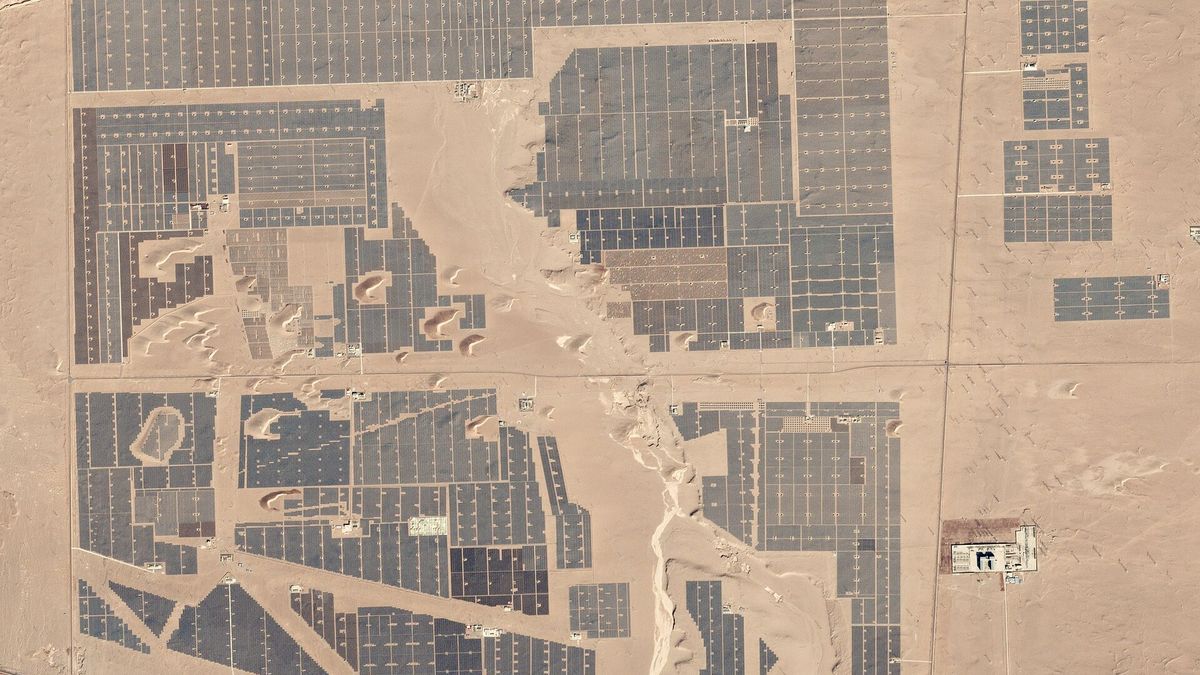
The plan sets two sub-targets for 2030, the NEA said. Storage attached to large renewable energy bases, including desert solar and offshore wind hubs, should reach about 50 gigawatts to 60 gigawatts, a range CCTV also reported. Independent storage on the grid side that can supply power at times of peak demand should reach about 140 gigawatts. Grid-side storage already accounts for more than half of installed capacity, and the official said it is expected to make up most of the new storage that provinces build for their own use.
On technology, the plan calls for faster upgrades of lithium-ion storage and wider use of sodium-ion batteries, and wants compressed air, flow batteries and flywheels to move from pilots to commercial use. It lists solid-state batteries and hydrogen storage among technologies to develop for the future.
Among 10 support measures, the plan calls for storage to take part fairly in electricity spot and ancillary services markets, for a mechanism that pays for the reliable capacity storage provides, and for a more rational layout of manufacturing capacity and structural optimization of the industry. It also says Beijing will support storage companies expanding overseas.
From 136 gigawatts to 167 in nine months
The pace of building has been fast. New-type storage reached 136 gigawatts at the end of 2025, and capacity added during the previous five-year period was more than 40 times the total at the end of 2020, the NEA said. By the end of September the fleet stood at 167 gigawatts and 435 gigawatt-hours, up 63% from a year earlier, an NEA official told a press conference on Oct. 30. Average duration rose to 2.61 hours, and equivalent utilization was about 915 hours, roughly 10 hours more than a year earlier.
Reaching 300 gigawatts by the end of 2030 implies adding about 133 gigawatts in a little over three years, roughly the pace set over the past nine months.
Separate data from the China Electricity Council, which tracks a narrower set of electrochemical stations, showed 87 new stations totaling 12.6 gigawatts and 39.36 gigawatt-hours added in the third quarter, up 172% from a year earlier and 3% from the second quarter, TaiyangNews reported on Friday. Inner Mongolia, Xinjiang, Hebei, Shanxi and Shandong led the additions, it said.
The storage push sits alongside a surge in solar. China's solar capacity overtook coal in July and reached 1,310 gigawatts at the end of September, while coal's share of power generation fell to 49.1%, the NEA said at the Oct. 30 briefing.
Export controls stay suspended
The plan arrived the same week that China extended a pause on its export controls for lithium batteries. The Ministry of Commerce and the General Administration of Customs extended the suspension so that it runs from Nov. 11, 2026, to Jan. 10, 2027, according to TaiyangNews. The controls cover lithium-ion batteries with energy density of at least 300 watt-hours per kilogram, certain lithium iron phosphate and ternary precursor materials, and graphite anode materials, along with related equipment and technology. They were announced in October 2025 but suspended before taking effect and have never been applied, the outlet said.
For buyers in Japan, South Korea, India and Southeast Asia, the extension keeps supply of Chinese cells and materials open through early January. CATL, the largest maker, reported its third-quarter results last month.
China's storage build is part of a wider regional shift. Asia accounts for 78% of wind and solar capacity under construction worldwide and 73% of nuclear reactors being built, Reuters columnist Gavin Maguire wrote this week, citing Global Energy Monitor data. Storage helps solar and wind displace coal and gas in the evening hours, when fossil plants have traditionally filled the gap.
The next test is Jan. 10, when the export-control suspension is due to lapse unless Beijing extends it again.
Sources
- National Development and Reform Commission / National Energy Administration: Notice on issuing the 15th Five-Year Plan implementation plan for new-type energy storage (Oct. 29, 2026)
- National Energy Administration: NEA official answers questions on the 15th Five-Year new-type energy storage plan (Nov. 13, 2026)
- The Paper: NDRC and NEA jointly issue 15th Five-Year new-type energy storage implementation plan (CCTV News) (Nov. 13, 2026)
- 21st Century Business Herald: 15th Five-Year new-type energy storage plan released (Shanghai Securities News) (Nov. 13, 2026)
- National Energy Administration: NEA press conference transcript on energy in the first three quarters (Oct. 30, 2026)
- TaiyangNews: China Solar PV News Snippets - November 13, 2026 (Nov. 13, 2026)
- The Star: Asia's nuclear pipeline marks a new challenge for fossil fuel demand (Reuters column) (Nov. 13, 2026)
Our standards: Capital Times reports under the principles set out in our Editorial Standards and Ethics Policy. Spotted an error? Report it to our editors.